Thessaloniki Travel Tips: First-Time Visitor Guide
Thessaloniki, Greece’s dynamic second city, blends centuries of history with modern life, energetic cafes, oceanfront promenades, Byzantine treasures, and authentic flavors. As a first-time visitor, you’ll find the city both navigable and surprising—never overwhelming, but always delightfully complex. This guide brings together essential tips, practical advice, and real traveler know-how, so your Thessaloniki trip is effortless from day one.
Why Visit Thessaloniki? An Introduction for European Travelers
Strategically located in Northern Greece, Thessaloniki serves as a gateway between the Balkans and the Mediterranean. This city is famous for its lively public squares, youthful population, and ease of access both to beaches and scenic hinterlands. Unlike Athens, Thessaloniki is compact and walkable—ideal for exploring ruins, vibrant food markets, and the contemporary urban waterfront, all within one day.
Whether you crave Byzantine heritage, a taste of Ottoman history, nightlife by the sea, or simply affordable, rewarding city breaks, Thessaloniki fits seamlessly into broader European itineraries. For travelers combining multiple countries, it offers a convenient, culturally rich stopover between Central Europe and the Aegean islands.
Thessaloniki in focus: A quick guide to the city’s top sights and neighborhoods.
The above video spotlights the city’s highlights—Byzantine walls, bustling markets, waterfront cafes, and beautiful churches—giving you visual context to plan your days. Seeing the pace and style of street life helps travelers decide which neighborhoods and attractions feel most appealing, whether you’re seeking culture, relaxation, or a lively bar scene.
Thessaloniki's urban core is full of easily walkable routes—practical for travelers who like to skip the hassle of metros or long taxi rides. Public transport, taxis, and regional trains link the city to beaches and day trips without stress.
Essential Orientation: Geography and How to Get Around
City Layout and Key Neighborhoods
Thessaloniki’s heart lies close to the water, with Aristotelous Square acting as a central focal point. The main neighborhoods of interest for travelers are:
- Waterfront / Nikis Avenue: Lined with cafes, bakeries, and bars, perfect for sunset walks.
- Ladadika: Colorful, historic streets, well-known for food, music, and lively nights.
- Ano Poli (“Upper Town”): Byzantine walls, panoramic views, and quieter, traditional character.
- Rotunda - Kamara: Student-friendly area with archaeological sites, universities, and budget dining.
- Modiano & Kapani Markets: The best place for authentic local produce and a sense of the city’s pulse.
| Neighborhood | Ambiance & Highlights |
|---|---|
| Ladadika | Colorful nightlife, meze tavernas, historic cobblestones |
| Ano Poli | Byzantine walls, panoramic city views, peaceful alleys |
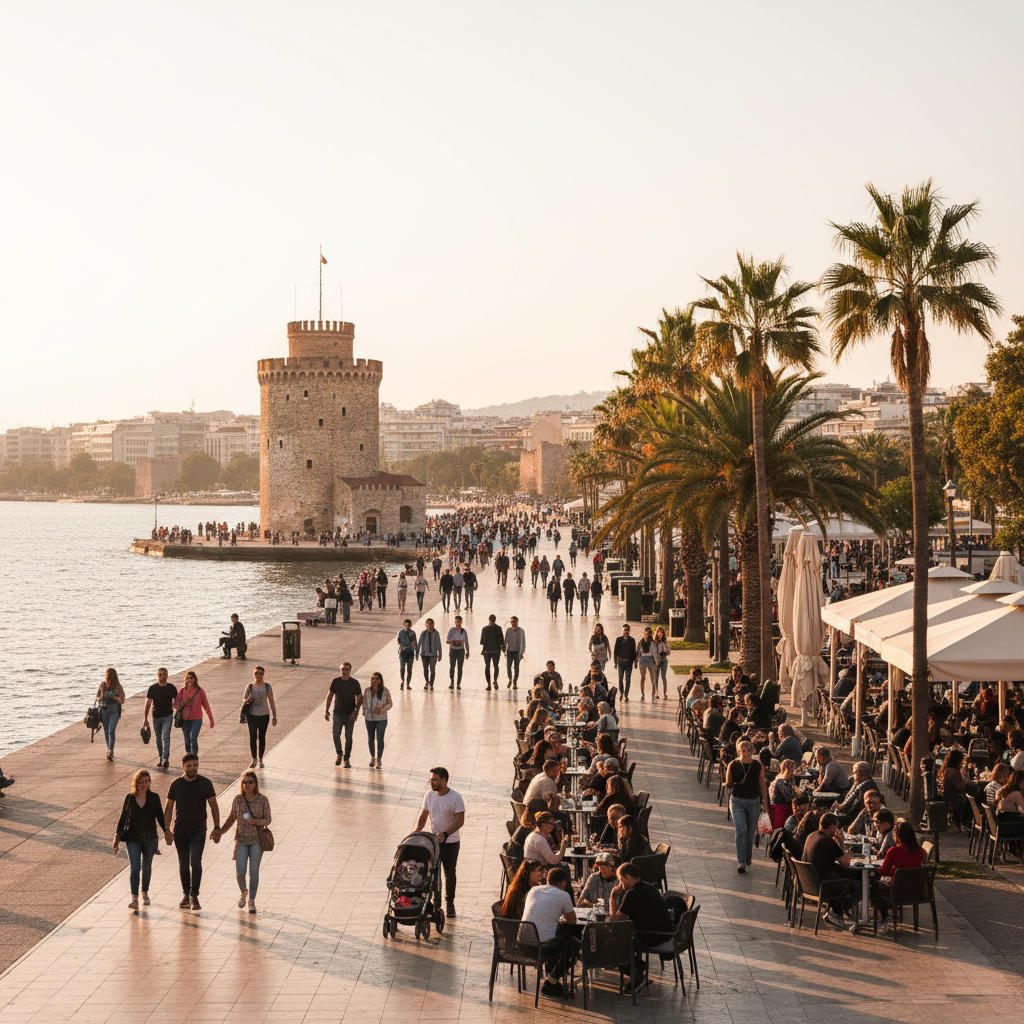
| Waterfront | Open promenade, sunset cafes, the iconic White Tower |
Getting Around Thessaloniki
Thessaloniki is a walker’s city, but regular buses (ΟΑΣΘ/ OASTH) cover routes from the waterfront to outlying neighborhoods, the train station, and the airport. Single tickets are affordable (under €1.00 city center) and prepaid tickets can help avoid queues. Taxis are easy to find, app-based rides (like Beat) are reliable, and cycling is growing but streets can be busy.
Arriving by train is one of Thessaloniki’s most Europe-friendly options, connecting directly to Athens and branching into the Balkans. Regional buses connect easily to Halkidiki beaches and the UNESCO Meteora monasteries for day trips or overnights. Ferries from Thessaloniki reach some North Aegean islands but run mainly in summer.
Thessaloniki at a glance: Sites are beautifully walkable in the city center.
The Instagram reel above shows how Thessaloniki’s most famous landmarks—White Tower, Roman Agora, Rotunda, and the open-air markets—are all within a central walk. From Aristotelous Square to the historic port, you can sample the best of the city in a gentle loop, perfect for half-day explorations or long, meandering strolls.
Walking and local buses mean you rarely need a car. If you’re planning day trips or beach time, consider renting a car only for those days; in the city, parking is tight and traffic can be tricky for those new to Greek urban driving.
Must-See Sights and Essential Experiences
Byzantine, Roman, and Ottoman Heritage
Thessaloniki boasts some of Europe’s greatest Byzantine treasures. The Rotunda (a UNESCO site), intricate mosaics of the Church of Agios Dimitrios, and the city walls in Ano Poli all provide glimpses into centuries of history. Don’t miss the Roman Forum, triumphal Arch of Galerius, and the ghostly remains of the old Egnatia Roman road—reminders of Thessaloniki’s role as a crossroads of empires.
The White Tower, once an Ottoman prison, is now an excellent orientation hub: climb it for panoramic city vistas and historical exhibits. Photography is welcome, and the view at sunset is legendary among locals.
Uncover Thessaloniki’s hidden gems, from lively squares to Byzantine ruins.
This engaging vlog brings you to corners many first-timers miss: underground art scenes, small family-run bakeries, and leafy streets away from the main crowds. Thessaloniki is a city of details—peek into Byzantine chapels, local cheese shops, and unexpected city gardens for a richer experience.
Look beyond the guidebook “top 10” lists; stroll backstreets west of Egnatia or climb into Ano Poli for winding stone alleys, each with its own view over the Thermaic Gulf and vibrant city life below.
Markets, Food, and Coffee Culture
Greek culinary tradition is woven into Thessaloniki’s everyday life. The Modiano and Kapani markets are atmospheric and photogenic, with local cheeses, olives, spices, seafood, and sweet bougatsa pastries at every turn. Vendors are generally happy to let you taste before you buy—just ask with a smile and a “kali soumera” (good morning).
For dining, seek out meze tavernas in Ladadika and try dishes ranging from fresh octopus and grilled sardines to spicy bougiourdi and classic moussaka. Many local spots don’t accept cards, so carry some euros for casual meals and quick bites at crowded market counters.
Summer vibes in Thessaloniki: Where food, culture, and friendly traditions meet.
This Instagram reel captures the simple joys of Thessaloniki: strong Greek coffee served with a view, plates of shared meze under awnings, and the hum of conversation from breakfast until late at night. Whether you want modern bistros or traditional grills, Thessaloniki delivers a Mediterranean feast that feels accessible to all budgets.
The coffee scene is more than a morning ritual—cafes double as study halls and meeting points until late in the evening. Sample a Greek frappe (iced instant coffee), but if visiting in winter, order a hot, foamy “ellinikos” for the true local experience.
Nightlife and Local Entertainment
With its university vibe and open-air lifestyle, Thessaloniki’s nightlife ranges from classic tavernas and ouzeries in Ladadika to trendy cocktail spots along Nikis Avenue. Music, laughter, and plenty of fresh air are integral here. Summer nights spill into the streets, and even midweek, cafes and wine bars stay buzzing till midnight or later.
For a hyper-local experience, consider catching a “rebetiko” music set—traditional Greek urban blues—in a hidden bar or garden. Or stroll the waterfront after dark, when the city glows and the promenade feels festive yet welcoming to visitors of all ages.
Experience Thessaloniki’s day-to-night energy, food, and local gatherings.
Watch the above guide for a sense of the city’s rhythm: shoppers crowding bakeries in the morning, lunch at bustling market stalls, and evenings winding down with friends at the seafront. The city is remarkably safe for solo travelers and groups, and it’s easy to mingle with locals—especially students and young professionals who love to share tips or practice their English.
Dress codes are casual, but people take pride in appearance—think smart-casual for evenings out. Women travelers generally feel at ease anywhere in the city, including walking back to central hotels at night, but as in any European city, keep aware of your surroundings.
Accommodation: Where to Stay in Thessaloniki
From all-star boutique hotels to backpacker hostels, Thessaloniki’s accommodation scene fits every travel style. The majority of visitors opt for stays in or near Aristotelous Square, the Ladadika district, or by the White Tower, where proximity to the waterfront and public transport is unbeatable.
Central options tend to be small- to medium-sized hotels, with staff offering friendly recommendations on markets and local places to eat. Apartments are an excellent choice for families and groups, especially in Ano Poli or near Valaoritou Street, a lively nightlife hub.
| Area | Best For |
|---|---|
| Aristotelous Square | Central location, shopping, easy public transport |
| Ladadika | Foodies, nightlife, walkability |
| Ano Poli | Views, quieter stays, tradition |
Most places include Wi-Fi and breakfast; budget rooms start around €45 per night, while waterfront boutique hotels run €100–€180 in peak summer. Book early during festivals, university graduations, or Orthodox Easter, as Thessaloniki becomes Greece’s unofficial party capital during major events.
Sample Itineraries: How to Spend Your Time
1 Day: Highlights Loop
- Start with coffee at Aristotelous Square.
- Visit the Rotunda and Arch of Galerius, continue to Agios Dimitrios church.
- Stroll the Modiano and Kapani markets for lunch on the go.
- Climb the White Tower in late afternoon, then walk the waterfront promenade.
- Dinner and drinks in Ladadika district.
2–3 Days: Deeper Discovery
- Add Ano Poli for views and small tavernas.
- Take a local bus to Eptapyrgio (Heptapyrgion fortress).
- Day trip to the Archaeological Museum or relax at Perea beach by ferry or Uber Boat in summer.
- Sample contemporary art at MOMus or stroll Valaoritou for nightlife.
First-timer surprises: What seasoned travelers loved most about Thessaloniki.
This video’s traveler reactions affirm that Thessaloniki’s unbeatable mix of food, music, and easy-going hospitality makes it a favorite among repeat visitors to Greece. From market tastings and ancient ruins to the city’s honest, vibrant mood, it reveals a side of Greece distinct from the islands or capital.
Early mornings are peaceful—great for sightseeing before crowds—and shops open slightly later than in Western Europe, usually 9:30–10:00 AM. Afternoons are for relaxed meals, especially during the hot summer months when locals take their time over lunch.
Day Trips and Regional Adventures
Thessaloniki is a smart base for exploring Northern Greece. Day trip highlights include:
- Meteora Monasteries: Astonishing clifftop monasteries (3 hours by car or 5 hours by train/bus, but worth an early start for dramatic scenery).
- Halkidiki: Lovely, sandy peninsulas with turquoise beaches—easiest reached by regional bus or day tour in summer.
- Vergina: The Royal Tombs of Philip II of Macedon (father of Alexander the Great), accessible by train and taxi or guided trip.
Regional rail and bus connections are frequent and budget-friendly. For more trip planning details to these sites, check Thessaloniki’s Wikipedia guide or Rome2Rio for route ideas and schedules.
Your visual roadmap: Make the most of your time in and around Thessaloniki.
Seeing the breadth of things to do and the ease of hopping between city sites and regional wonders helps even seasoned European travelers optimize their days. Thessaloniki is both a destination and a launchpad—ideal for shorter European breaks or as part of longer Greek adventures.
Cost, Budgeting & Practical Tips
- Street food meals: €3–6 (try the local koulouri or savory pies).
- Sit-down dinners: €10–€25 per person in local tavernas.
- Coffee at a cafe: €2–4, beer/wine: €3–5.
- Central buses and local tickets: under €1.00.
- Entry to main sights: €4–€8 each; combo tickets offer savings.
Thessaloniki is generally less expensive than Athens or Western Europe’s capitals, especially for accommodation and dining. ATMs are widely available, but some small eateries and market stalls only accept cash. Tipping is modest (round up or leave 5–10% at sit-down restaurants; no tip required for coffee, snacks, or taxis).
English is spoken in tourist areas, but learning a few Greek basics (hello: “yassas,” thank you: “efcharistó”) is appreciated and invariably met with a warm response.
Neighborhood flavor and easy eats: Thessaloniki’s best snacks and traditions, in a reel.
The city’s snack culture is legendary. Start your morning with a local bougatsa (custard or cheese pastry), eat lunch on your feet in the market, and end the night snacking on fresh seafood or grilled street skewers. Local ingredients and family recipes are a cornerstone of daily life.
When to Visit: Seasons and Festivals
- Spring (April–June): Mild weather, blooming flowers, open-air cafes.
- Summer (July–September): Hot, lively nightlife, easy access to beaches.
- Autumn (October–November): Pleasant temps, harvest markets, fewer crowds.
- Winter (December–March): Quiet, good for museums, Christmas and “Dimitria” festival celebrations.
The International Film Festival (November) and Dimitria Festival (autumn) are standout cultural events. Summers can be hot but rarely stifling due to the seaside breeze. Winters are gentle, with the city feeling cozy, particularly in upper neighborhoods with traditional tavernas and fireside dining.
Thessaloniki in May: One of Europe’s most enjoyable shoulder-season destinations.
Shoulder months are ideal for visitors who prefer a less crowded, more relaxed atmosphere. Flights and hotels are more attainable, and you’ll find locals especially open for conversations about the city’s history and hidden icons.
If planning for the holidays, you’ll discover city squares lit up with seasonal decorations and music festivals—Thessaloniki comes alive even in winter, with cozy spots for mulled wine and pastry breaks.
Winter in Thessaloniki: A quiet, atmospheric side of the city—perfect for a calmer urban holiday.
Local Etiquette, Safety & Traveler’s FAQ
Safety: Thessaloniki is considered one of Greece’s safest cities. Usual European city precautions apply: watch your bag in crowded markets, use bank ATMs in daylight or inside shops, and avoid unlicensed taxis. Solo travelers, including women, frequently report feeling comfortable both day and night.
Etiquette Tips:
- Greeks appreciate a friendly greeting and direct eye contact. “Yassas” is suitable for all.
- Dress codes are relaxed but neat clothing is favored when dining at restaurants or visiting churches.
- Smoking in cafes is more common than in Western Europe but is now officially restricted inside—always check for smoke-free tables.
- Late meals (after 9 PM) are standard, and lingering over food is part of the local rhythm—no one expects you to rush.
The city is LGBTQ-friendly, especially in the center, and recent years have seen a visible pride movement and vibrant arts community.
Emergency numbers: Police 100, Ambulance 166. Pharmacies and 24-hour kiosks are scattered throughout the center for essentials. EU travelers can use their EHIC card for basic hospital care, but travel insurance is recommended for all visitors from abroad. Consider checking Schengen Visa Info if combining Thessaloniki with other European destinations, especially as entry requirements and health insurance can occasionally change.
Final Tips and Smarter Planning Advice
- Absolute must: Try at least one traditional pastry, a local seafood meze, and a strong Greek coffee with waterfront views.
- If you love history, invest in a combo ticket for archaeological sites—the savings add up fast.
- Download the OASTH mobile app or keep bus schedules handy for midday trip planning.
- Arrive early at popular museums and churches to avoid tour groups or school visits.
- Be spontaneous—Thessaloniki rewards travelers who explore beyond the headline sights.
Plan Your Best Europe Trip
Want deeper guides, smarter routes, and practical travel tips?
Contact UsBrowse more Europe travel guides and itineraries:
Visit Our BlogNext stop: your Greek adventure. Let Thessaloniki surprise you, fuel your curiosity, and provide memories that make European travel richer and more meaningful. Happy travels!